
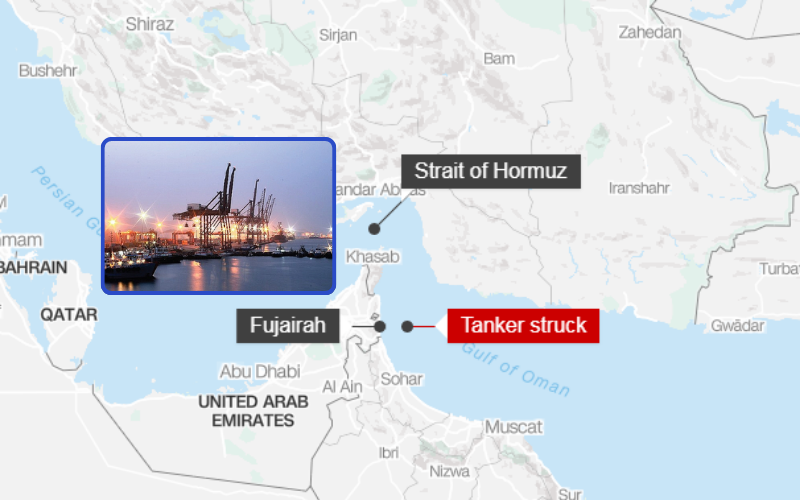
The Strait of Hormuz has long been a critical shipping lane, through which the majority of vessels entering and leaving the Persian Gulf region must pass. As regional security tensions rise, carriers have been forced to limit schedules, reduce sailing frequency, and in some cases suspend certain routes through the area entirely. The state of Hormuz congestion is therefore not limited to the strait itself, but extends across the entire Middle East supply chain, from ports and warehouses to the domestic transport systems connecting countries in the region.
Many import and export businesses are already reporting longer transit times, frequently changing vessel schedules, and unexpected additional costs. For heavy machinery, industrial equipment, and high value project cargo, the impact of Hormuz congestion is even more pronounced, since delivery timelines for these shipments are typically stricter than for ordinary consumer goods.
According to DP World, container throughput at Jebel Ali Port in Dubai has fallen by 90.1 percent year over year, down to roughly 374,000 TEU compared to around 3.8 million TEU the previous year. This is a very significant decline for one of the most important transshipment hubs in the Middle East. Jebel Ali Port continues to operate normally and no major physical damage has been reported, however the sharp drop in actual throughput reflects the wide reaching impact of Hormuz congestion on port operations.
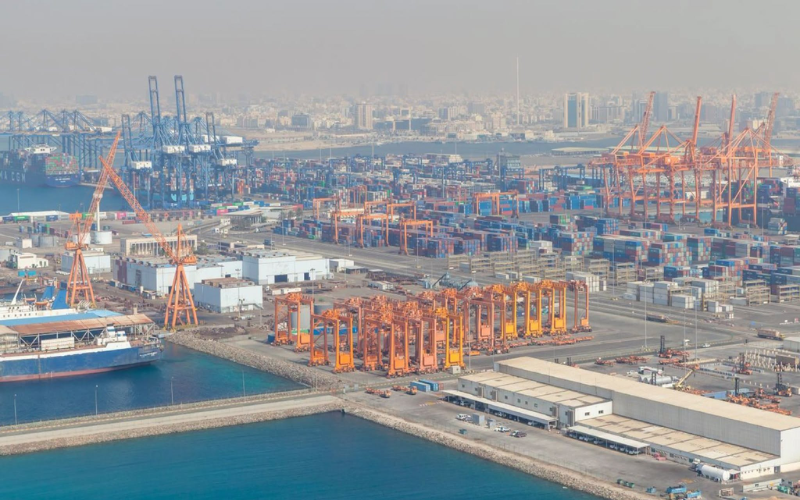
The primary cause behind the decline in Jebel Ali's throughput stems from restricted vessel traffic through the Strait of Hormuz. Many carriers can no longer maintain normal operating schedules, and have had to adjust routes, reduce port calls, or divert to alternative gateways in the region. As vessel calls decrease, cargo volume through the port declines proportionally, creating a chain reaction affecting related services such as depots, warehousing, and inland transport around the Dubai area.
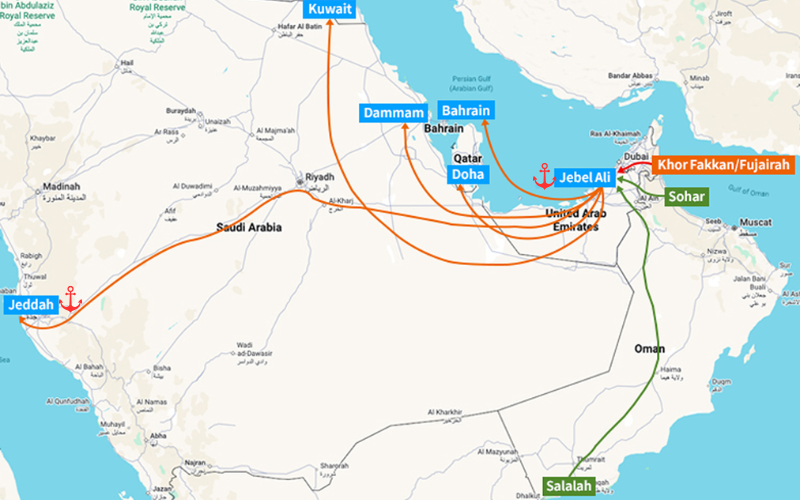
Amid prolonged Hormuz congestion, carriers and logistics companies have begun redirecting cargo flows to ports outside the direct impact zone of the strait. Part of the cargo volume is now being routed through Fujairah and Khor Fakkan in the UAE, or through Jeddah and Yanbu in Saudi Arabia. In addition, combined sea and land routes through Saudi Arabia are also being used by many carriers to maintain connectivity to the Gulf region.
DP World is accelerating the development of Fujairah Port to offset part of the volume affected by Hormuz congestion. The Al Rugaylat terminal is expected to add roughly 2.5 million TEU of container capacity per year. This is viewed as a long term preparation step, giving the region an additional contingency option while the situation through Hormuz remains uncertain, while also reducing dependence on Jebel Ali Port under current conditions.
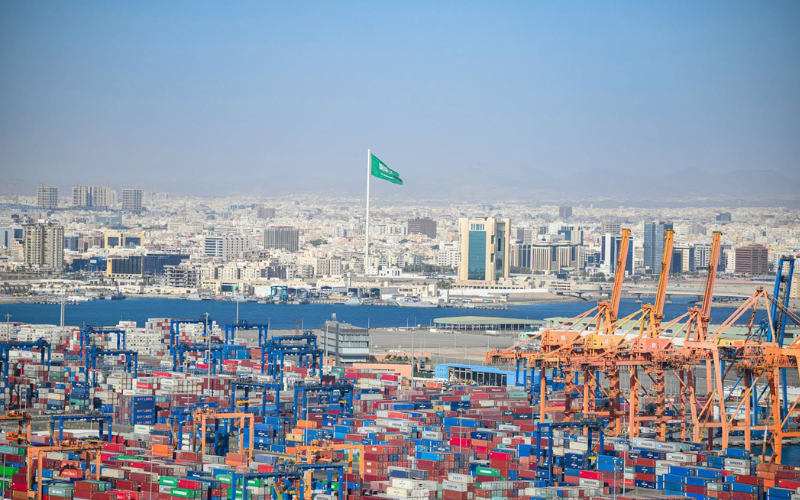
While Jebel Ali sees declining volume, Jeddah Port faces the opposite problem, becoming overloaded due to a rapid increase in diverted cargo. According to the Journal of Commerce, project cargo at Jeddah Port is currently waiting up to 10 days for berth access, while trucks are waiting up to 3 days to enter the port. The routing model through Jeddah or King Abdullah Port, followed by inland trucking across Saudi Arabia to Dammam, then onward by feeder vessel to the UAE and Bahrain, is helping to keep cargo flowing. However this model is also creating new bottlenecks, extending overall transit times well beyond what was typical before Hormuz congestion began.
For businesses shipping to the UAE, Saudi Arabia, and the wider GCC region, particularly heavy machinery, equipment, or project cargo, proactively monitoring the situation and preparing contingency plans is essential while Hormuz congestion remains unresolved. Key actions businesses should take include closely tracking actual vessel schedules from carriers, checking for changes in transshipment ports before each shipment, allowing extra buffer time for feeder and inland connections, and preparing a plan to handle additional costs that may arise from rerouting.
Staying updated through international sea freight providers also helps businesses reduce the risk of delays and avoid being caught off guard by frequently changing vessel schedules. As the Middle East supply chain remains volatile, choosing an experienced logistics partner with a broad network will help ensure cargo is transported safely and on time.
Amid the volatility in international sea freight caused by Hormuz congestion, VDM Forwarder continues to closely monitor actual developments from carriers and international shipping routes in order to support customers promptly. With more than 15 years of experience in sea freight, domestic transport, air freight, and customs declaration services, VDM Forwarder provides logistics solutions tailored to each type of cargo, including heavy machinery, equipment, and project cargo requiring special handling.
The VDM Forwarder team continuously tracks port conditions, transshipment routes, and actual vessel schedules, helping customers stay ready to respond whenever changes arise during transport. If your business has shipments heading to the Middle East and needs guidance on the right shipping solution during the current period of Hormuz congestion, VDM Forwarder is ready to provide a quote and detailed consultation through the hotline or official contact channels.

Receive shipping service price lists and optimal logistics solution advice from our experts.




We are always ready to advise and support you 24/7.