
Under Annex I of Decree 292/2026/ND-CP, strict regulatory oversight is delineated to safeguard national security, the environment, and public health.
The updated catalog specifically designates 10 export-prohibited commodity groups and 23 import-prohibited commodity groups. Compared to prior regulatory frameworks, relevant ministries and sector-specific agencies have re-systematized authority over each product category.
Monomaterial goods prohibited across both import and export streams include electronic cigarettes, heated tobacco products, rough diamonds non-compliant with the Kimberley Process Scheme, hazardous chemicals and banned minerals under the Law on Investment, alongside military arms, ammunitions, and specialized defense equipment.
Clear allocation of regulatory jurisdiction across ministries ensures transparency during HS code auditing and customs clearance procedures.
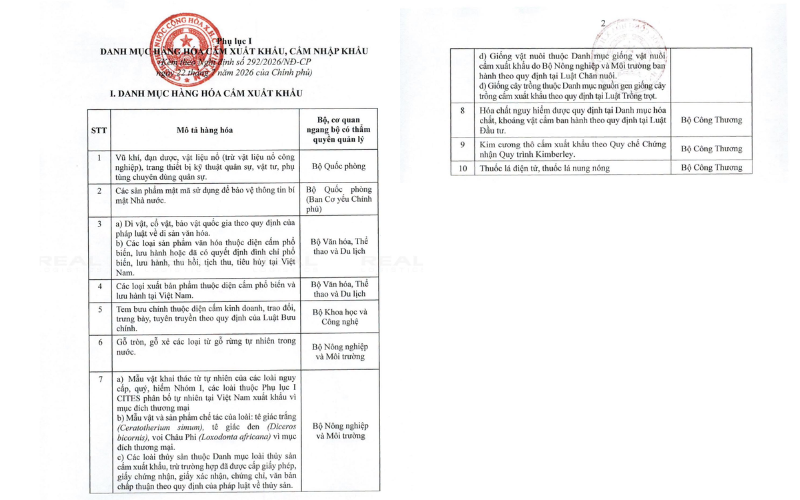

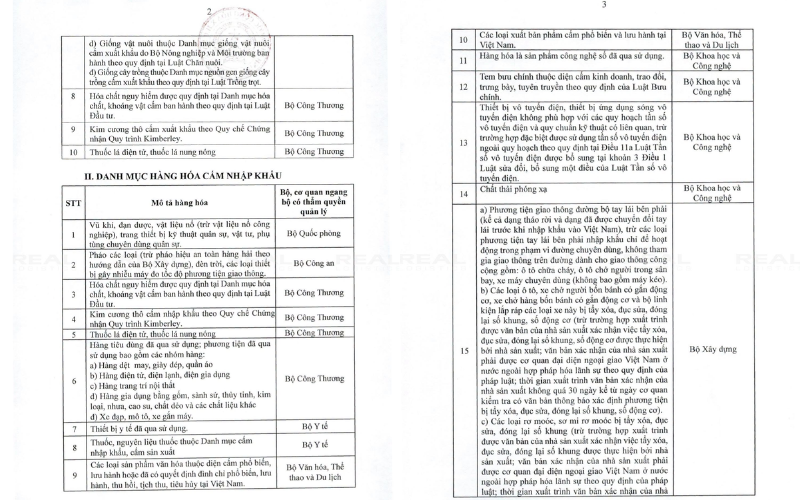
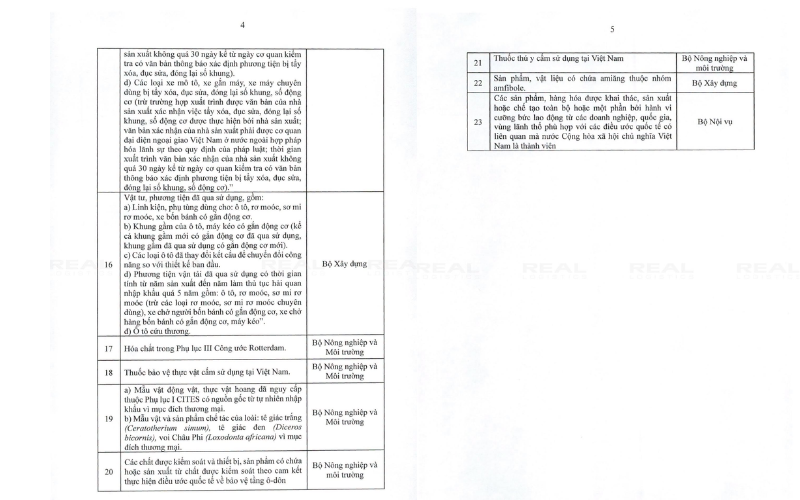
The most pivotal update in Decree 292/2026/ND-CP is the explicit import prohibition against goods mined, produced, or manufactured wholly or in part through forced labor practices.
Jointly administered with the Ministry of Home Affairs, this policy applies to entities, nations, or territorial jurisdictions pursuant to international treaties to which Vietnam is a signatory state. This measure demonstrates Vietnam’s commitment to international labor standards and sustainable economic integration.
Where specialized imports or exports of prohibited cargo are permitted for national defense, security, or scientific research purposes, strict processing timelines apply.
Licensing authorities must issue notice requesting documentation amendments within 3 business days for incomplete dossiers. Full processing and authorization clearance are completed within 5 business days upon receipt of fully compliant filings.
Prohibited goods admitted into Vietnam under special mechanisms may only be retained and utilized for a maximum timeframe of 2 years according to approved registrations.
To prevent supply chain disruptions when Decree 292/2026/ND-CP takes effect on September 5, 2026, businesses should execute the following protocol:
Enterprises must review their complete product inventory against Annex I of the Decree, conducting rigorous HS code verifications. This proactive measure detects secondhand goods or spare parts at risk of falling under prohibited categories.
For machinery, equipment, or tech import orders, supply chain integrity must be audited to ensure origin documentation complies with forced labor regulations.
Traders should collaborate closely with freight service providers to align with updated customs clearance protocols, preventing documentation rejections, container demurrage/detention, or forced cargo re-exportation.
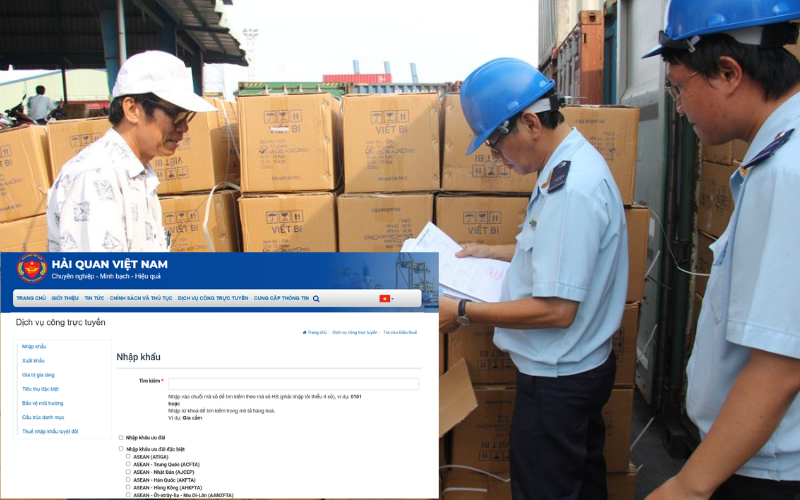
Regulatory changes in foreign trade management introduce complex documentation and customs challenges. VDM Forwarder serves as a trusted logistics partner, delivering tailored, compliant solutions.
Our specialized team maintains up-to-date expertise in regulatory shifts, offering HS code lookup, specialized inspection advisories, and risk assessments for goods subject to Import and Export Prohibitions. We provide end-to-end customs clearance, ocean freight, air freight, and inland trucking services optimized for speed, compliance, and cost efficiency. Contact VDM Forwarder today for expert consultation on your international shipments.

Receive shipping service price lists and optimal logistics solution advice from our experts.




We are always ready to advise and support you 24/7.