
Checking the documents in advance helps businesses minimize information discrepancies, unexpected costs, and potential delays in the delivery process.
Documents provide a basis for relevant parties to verify information about the cargo, transaction, and transportation process. For import and export shipments, these documents are also directly related to customs declarations and clearance procedures.
Information such as the product description, quantity, weight, shipper, consignee, port of departure, and port of destination must be accurately stated across the relevant documents. The Commercial Invoice, Packing List, and Bill of Lading are commonly used to cross check this information.
For example, the Packing List shows the number of packages and cargo weight, while the Bill of Lading records information related to sea transportation. If the information differs between documents, the business may need to review and amend the relevant paperwork.
For exported goods, customs documentation may include the customs declaration, Commercial Invoice or equivalent documents where applicable, as well as licenses or specialized inspection documents if the goods are subject to specific management requirements. Not every shipment requires the same set of documents.
Businesses should determine the type of import or export transaction and the characteristics of the goods before preparing the documentation. This helps minimize the risk of missing mandatory documents or preparing unnecessary paperwork.
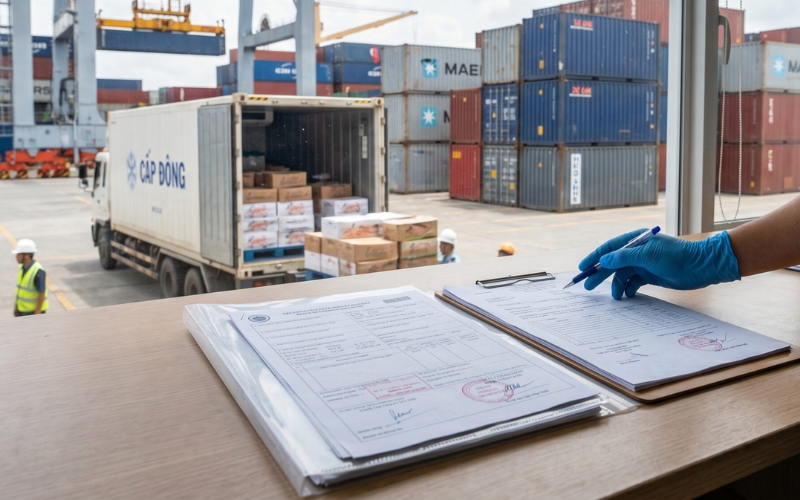
Documents are used throughout the sea freight process, from cargo preparation to delivery and receipt. Discrepancies in the product description, quantity, consignee, or transportation information may require the relevant parties to review and resolve the issue.
In particular, the Bill of Lading is an important document in sea transportation and is associated with the contract of carriage and the carrier's receipt or loading of the goods. Therefore, businesses should carefully check the information on the Bill of Lading before using it for subsequent delivery and cargo release procedures.
Depending on the shipment, businesses may need different types of documentation. However, several commonly used documents include commercial documents and transportation documents.
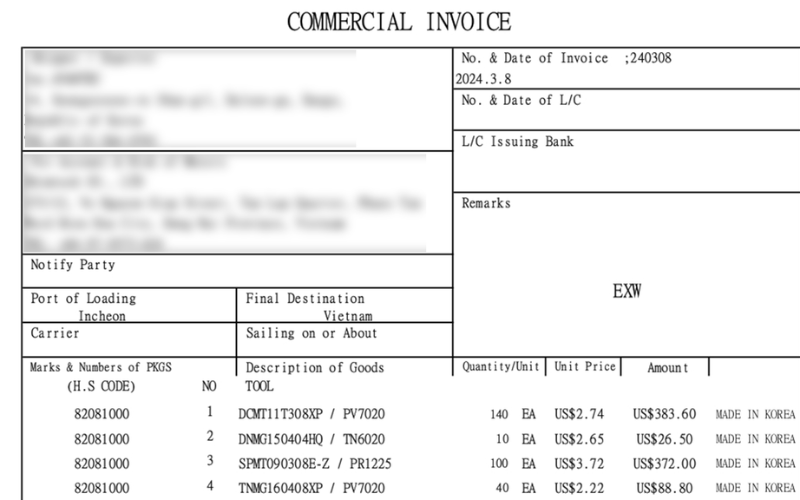
The Commercial Invoice contains basic transaction information such as the seller, buyer, goods, quantity, unit price, and total value. In certain cases, the Commercial Invoice forms part of the customs documentation as required by applicable regulations.
Businesses should carefully check the product description, quantity, value, and information of the relevant parties before using the invoice. Important information should also be consistent with other documents related to the same shipment.
The Packing List provides information about how the goods are packaged, the number of packages, weight, and other details for each package. This document helps relevant parties check and cross check the cargo more conveniently during the delivery process.
For example, if a shipment consists of multiple cartons with different specifications, the Packing List should clearly indicate the corresponding quantities and weights. The information on the Packing List should be checked against the actual cargo before transportation.
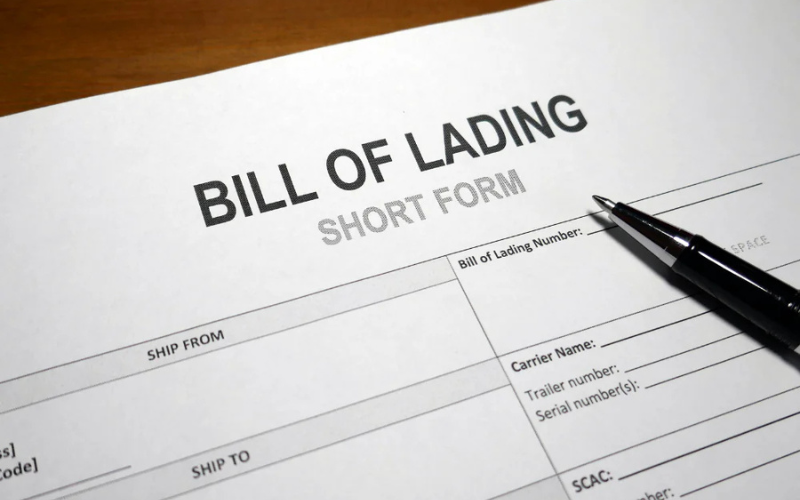
The Bill of Lading is a transportation document associated with the contract of carriage by sea and the carrier's receipt or loading of the goods. It is one of the key documents used during the transportation and delivery of cargo.
When checking the Bill of Lading, businesses should pay attention to the shipper, consignee, cargo description, quantity, port of loading, and port of discharge. Identifying errors early can make the amendment process easier.
The sales contract records the agreement between the seller and buyer regarding the goods, transaction value, terms of sale, and responsibilities of each party. It also serves as a basis for cross checking information when preparing commercial documents.
However, a sales contract should not be considered a document that must be submitted in every customs documentation set. Businesses should refer to the specific type of transaction and requirements of each shipment.
When exporting goods by sea, businesses should determine the type of goods and applicable management requirements before preparing the documentation. Some documents may include:
Not every export shipment requires all of the documents listed above. Businesses should determine the specific requirements for their goods and destination market before finalizing the documentation to avoid missing paperwork during customs clearance.

If an error is found in the documentation, businesses should address it as soon as possible rather than waiting until the goods are already in transit. Early document checks help identify which documents need to be amended and allow businesses to coordinate with relevant parties more effectively.
Businesses should notify the carrier or logistics provider as soon as inaccurate information is identified. The relevant parties can cross check the Commercial Invoice, Packing List, Bill of Lading, and customs documents to determine what needs to be corrected.
If the error is related to customs procedures, amendments must be carried out in accordance with applicable regulations and the actual status of the customs declaration. Proactive coordination helps minimize potential impacts on transportation and delivery schedules.
Businesses should review documents from the planning stage rather than waiting until the cargo has arrived at the port. Information such as the product description, quantity, weight, shipper, consignee, port of departure, and port of destination should be carefully cross checked.
For businesses that frequently use sea freight, creating a dedicated checklist for each type of cargo can be helpful. This approach makes it easier to identify discrepancies early and coordinate with the logistics provider before problems arise.

During the sea freight process, preparing and checking documents in advance is important to minimize discrepancies between different sets of paperwork. VDM Forwarder supports businesses in reviewing relevant documents such as Commercial Invoices, Packing Lists, Bills of Lading, and other documents required based on the characteristics of each shipment.
In addition to transportation services, VDM Forwarder coordinates with customers and relevant parties to review document information, monitor the progress of document processing, and promptly communicate when discrepancies arise. This coordination helps businesses stay proactive when preparing cargo, completing customs procedures, and handling the delivery of goods by sea.

Receive shipping service price lists and optimal logistics solution advice from our experts.




We are always ready to advise and support you 24/7.