
Among export markets, Brazil stands out as the most notable bright spot. Over the first 8 months, Vietnam tilapia export to Brazil reached 44 million dollars, up as much as 22,142 percent year over year, equivalent to more than 222 times. With this figure, Brazil accounts for nearly half of Vietnam's total tilapia export value over the period, becoming the single most important market for this industry.
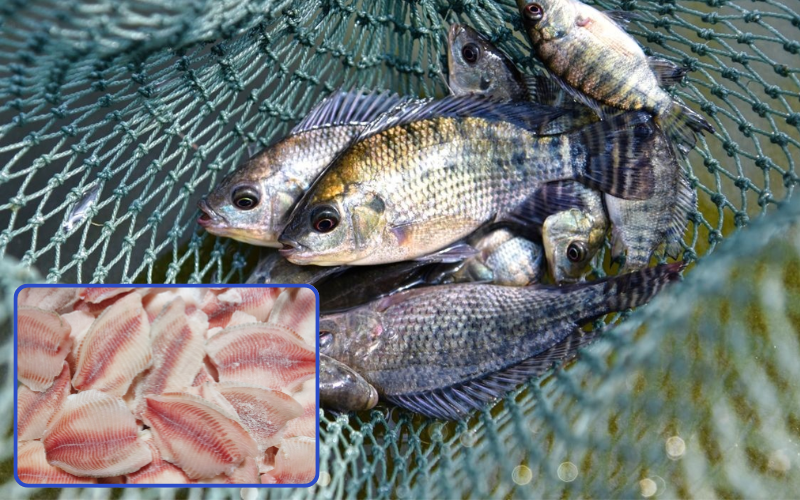
According to analysis from VASEP, this surge mainly reflects a rapid expansion in export scale from a very low base in the same period last year, rather than simply the result of natural growth. Even so, Brazil's willingness to spend significantly more to import Vietnamese tilapia still points to genuine rising demand in this market, creating an opportunity for domestic businesses to expand production and export scale.
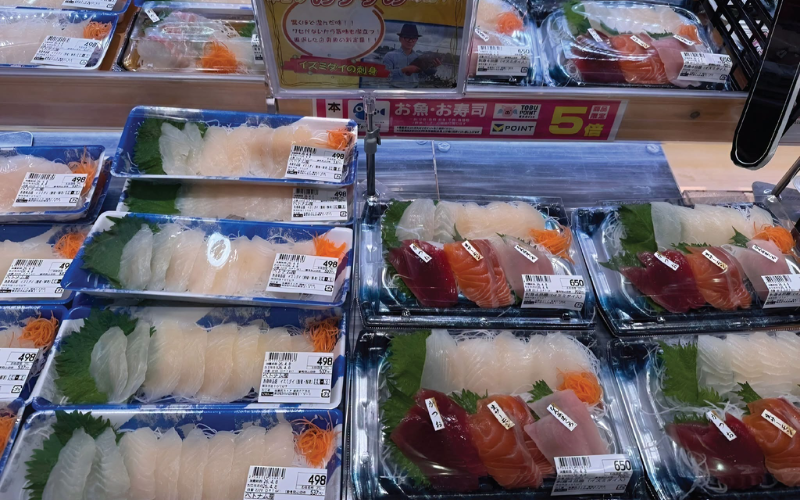
Alongside Brazil, Japan is also delivering positive signals for Vietnam tilapia export. Notably, tilapia is now being imported by some Japanese businesses for use in sushi and sashimi, rather than being limited to ordinary processed products as before.
According to businesses in the industry, demand from Japan is currently quite high, while domestic production has not yet been able to meet order volumes. Several major restaurant chains and five star hotel systems in Vietnam are also moving to purchase tilapia sashimi products, showing that the value of this product has risen considerably compared with tilapia's previous image as a cheap fish.
Beyond Brazil and Japan, the Middle East market is also showing positive growth signals for Vietnam tilapia export. Saudi Arabia alone reached export value of about 2 million dollars in August, bringing the 8 month total to 7 million dollars, up 23 percent year over year. This steady growth suggests the Middle East is gradually becoming a promising market alongside Brazil and Japan.
In contrast to the positive trend in the markets above, Vietnam tilapia export to the United States reached 21 million dollars in the first 8 months of the year, down 48 percent year over year. The main cause is that purchasing power in the US has not yet recovered clearly, while inventory levels in this market remain relatively high, making importers more cautious about placing new orders.
The decline in the US highlights the importance of diversifying export markets rather than relying on a few major partners. As Brazil, Japan, and the Middle East grow strongly, Vietnamese businesses have more room to offset the slowdown in the US market, while also reducing the risk of relying too heavily on any single market during periods of volatility.
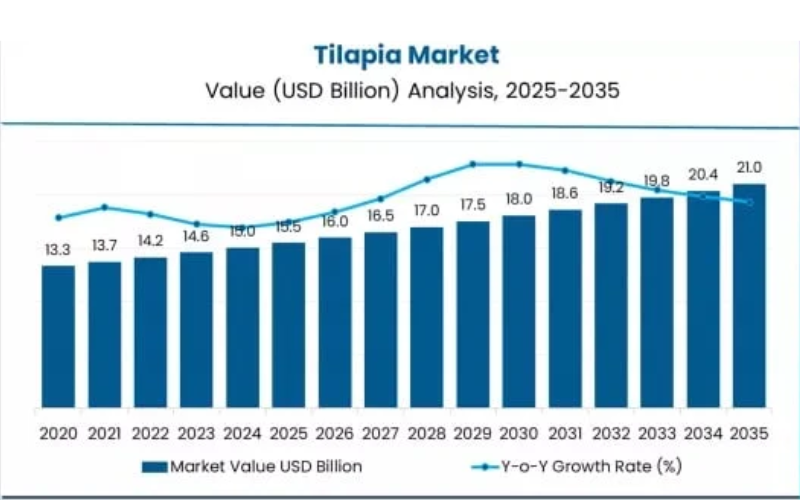
Vietnam's tilapia industry currently has an increasingly large production base. In 2025, total output reached around 420,000 tons, up 33 percent from 2024 and 2.2 times higher than in 2015. Between 2015 and 2025, output grew at an average rate of around 8.4 percent per year. This scale of production creates favorable conditions for the industry to expand exports, while also raising the need for better organization of farming areas and tighter control over growth rates.
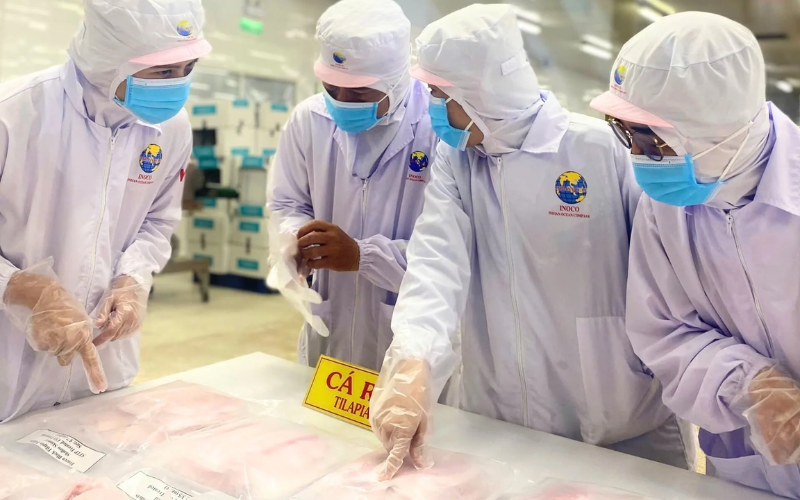
Industry experts note that farming expansion should not follow short term trends without a clear outlet identified in advance, to avoid repeating lessons from other seafood sectors that have previously struggled with oversupply. To sustain growth, businesses need to continue controlling quality from farming areas through processing, meet international certification requirements, and ensure traceability, particularly for demanding markets such as Japan.
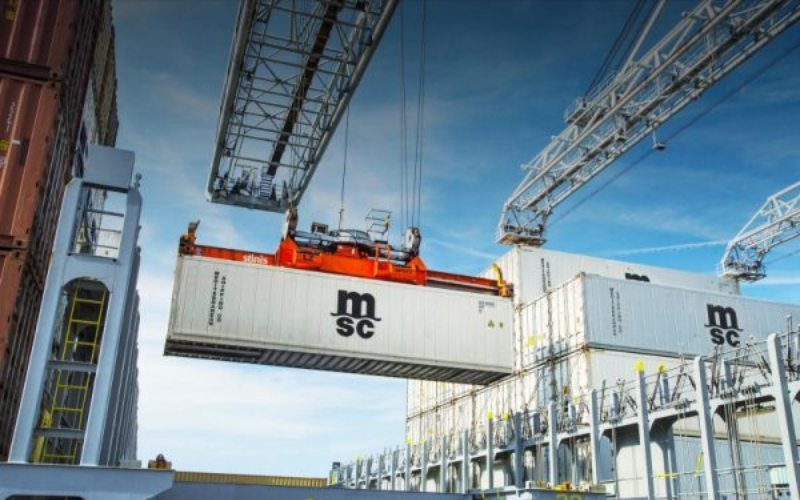
Amid the strong growth momentum of Vietnam tilapia export across multiple markets, demand for transporting seafood, particularly products that require cold chain preservation throughout the journey such as tilapia fillet or whole frozen fish, is also rising. With more than 15 years of experience in sea freight, domestic transport, container shipping, and customs declaration services, VDM Forwarder understands the specific requirements involved in transporting seafood exports to markets such as Brazil, Japan, and the Middle East.
The VDM Forwarder team continuously stays updated on regulations regarding quarantine, international certification, and traceability, while coordinating closely with all relevant parties to ensure goods are transported on schedule and maintain their quality throughout the journey. If your business needs to transport seafood exports or requires guidance on a suitable logistics solution, VDM Forwarder is ready to provide detailed consultation and a quote through the hotline or official contact channels.

Receive shipping service price lists and optimal logistics solution advice from our experts.




We are always ready to advise and support you 24/7.