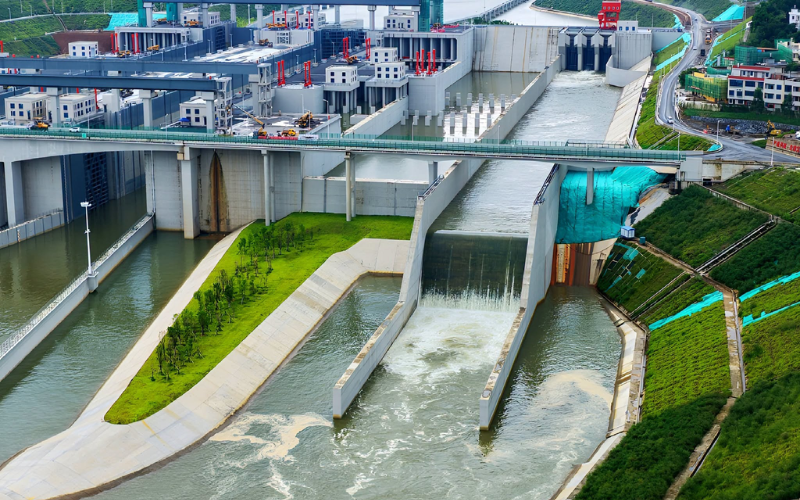
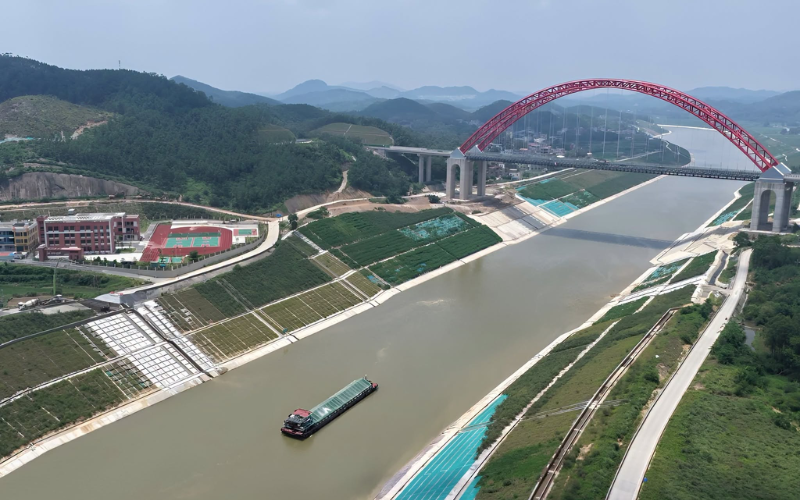
The Pinglu Canal stretches 134.2 kilometers, with total investment of around 72.7 billion yuan, equivalent to 10.8 billion dollars. The waterway connects the Xijiang River system to the Beibu Gulf, cutting roughly 560 kilometers compared with the traditional route that had to go around Guangdong province. The canal is designed to accommodate vessels of up to 5,000 tons, allowing large volumes of cargo to move directly from inland China to the sea without multiple transshipment stops.
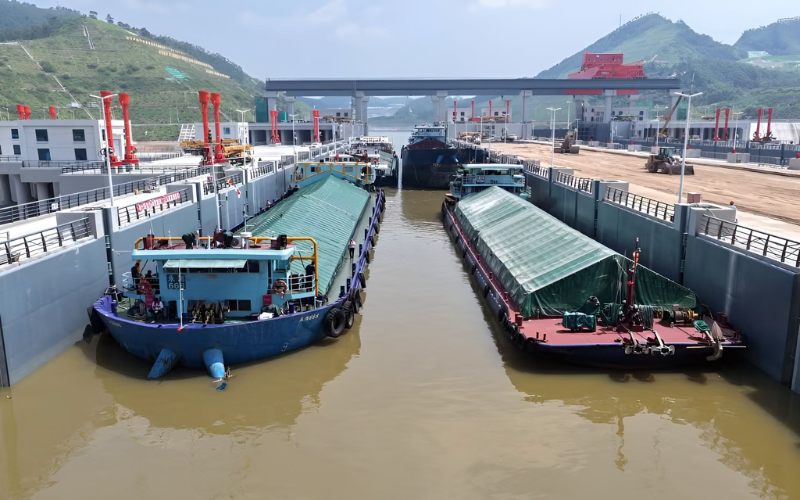
As soon as the canal officially opened, around 30 cargo ships passed through the waterway on the first day, carrying containers and bulk cargo such as steel, coal, minerals, construction materials, and fertilizer. The combined river sea shipping model reduces transshipment steps for suitable cargo flows, shortening transport time and cutting handling costs at intermediate points.
On the same day the Pinglu Canal began operations, two new river sea shipping routes were also launched. One route connects Nanning Port with Can Tho Port in Vietnam, while the other links Nanning Port with Yangpu Port on Hainan Island in southern China.
Of the two new routes, Nanning to Can Tho carries particular significance as the first international route launched at the same time the Pinglu Canal officially opened. The route creates an additional direct connection between Guangxi and Vietnam through the Beibu Gulf, offering another cargo transport option between the two countries alongside existing road, rail, and sea routes.
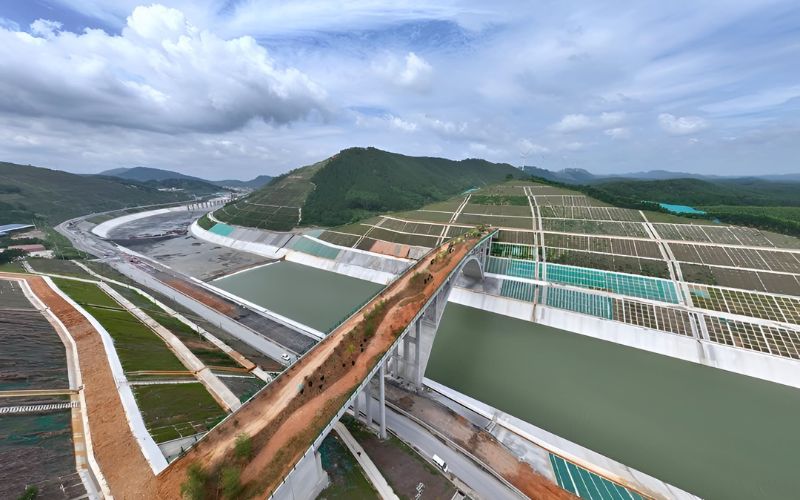
According to estimates from the Guangxi government, the Pinglu Canal could reduce logistics costs by around 18 to 30 percent for cargo moving through this route, while saving more than 5 billion yuan in transport costs annually for the wider region. Beyond Guangxi, the canal also provides a convenient sea gateway for other inland provinces such as Yunnan, Guizhou, Sichuan, and Chongqing, which previously relied heavily on the longer route around Guangdong.
It should be noted, however, that these figures remain projected savings for the early operating phase, not actual reductions applied evenly across every shipping route. The real impact will depend on cargo type, how frequently the route is used, and how well it connects with sea ports and river ports in the relevant localities.
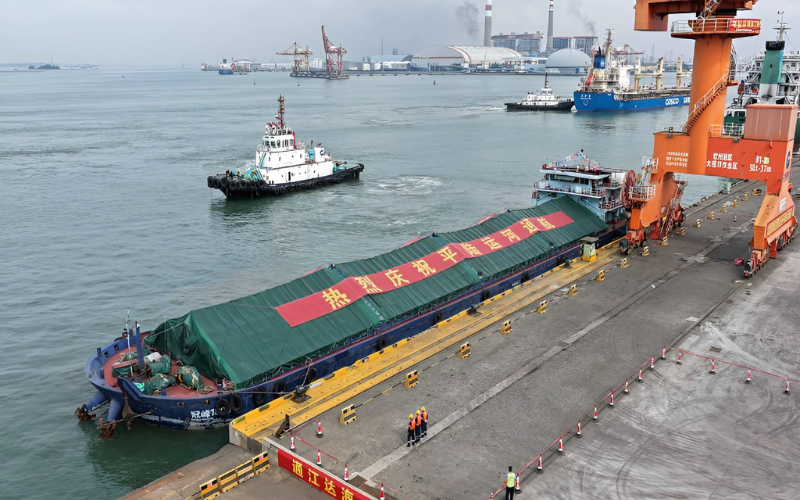
The Pinglu Canal began operations as trade between China and ASEAN reached 4.34 trillion yuan in the first half of 2026, up 18.2 percent year over year. By adding a new transport corridor linking southwest China, the Beibu Gulf, and Vietnam, the canal helps diversify trade connectivity between the two sides, alongside traditional road, rail, and sea routes.
For Vietnamese import and export businesses, particularly those trading with Guangxi and the inland provinces of southwest China, the Nanning to Can Tho route could become a worthwhile shipping option going forward. Closely tracking the actual progress of this route, along with information on schedules, freight rates, and cargo handling capacity at Can Tho Port, will help businesses plan their shipments between the two countries more proactively.
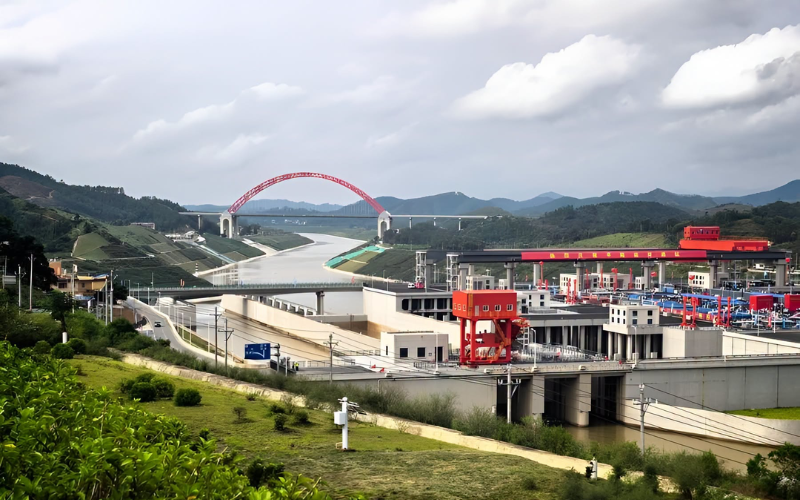
Following the launch of the Pinglu Canal's direct shipping route to Can Tho, VDM Forwarder continues to closely monitor new developments in regional logistics to keep customers informed in a timely manner. With more than 15 years of experience in sea freight, domestic transport, container shipping, and customs declaration services, VDM Forwarder understands the importance of diversifying shipping routes for the import and export activities of Vietnamese businesses.
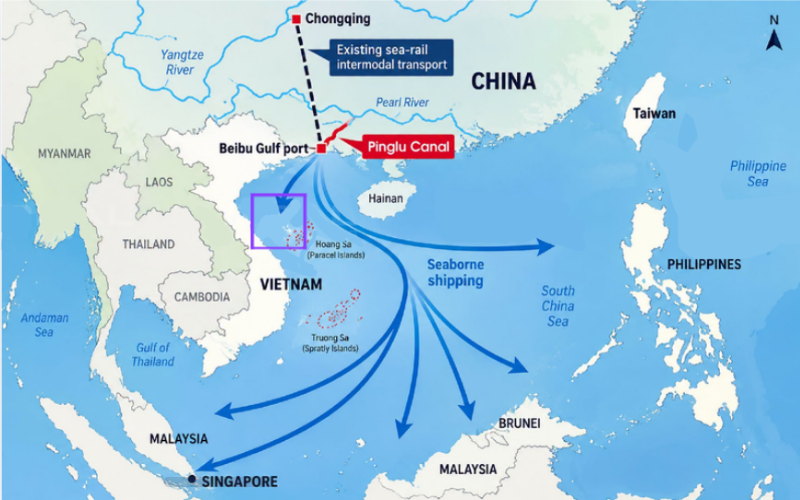
The VDM Forwarder team is ready to advise on suitable shipping options as new routes such as Nanning to Can Tho gradually reach stable operation, giving businesses more optimal choices in terms of time and cost. If your business needs to transport goods between Vietnam and China or requires guidance on a logistics solution suited to this new trend, VDM Forwarder is ready to provide detailed consultation and a quote through the hotline or official contact channels.

Receive shipping service price lists and optimal logistics solution advice from our experts.




We are always ready to advise and support you 24/7.