
Choosing the right port helps businesses balance transit time, costs, and delivery arrangements.
When shipping containers from Vietnam to the US, the port of departure should be selected based on the location of the cargo, handling capacity, and suitable shipping services.
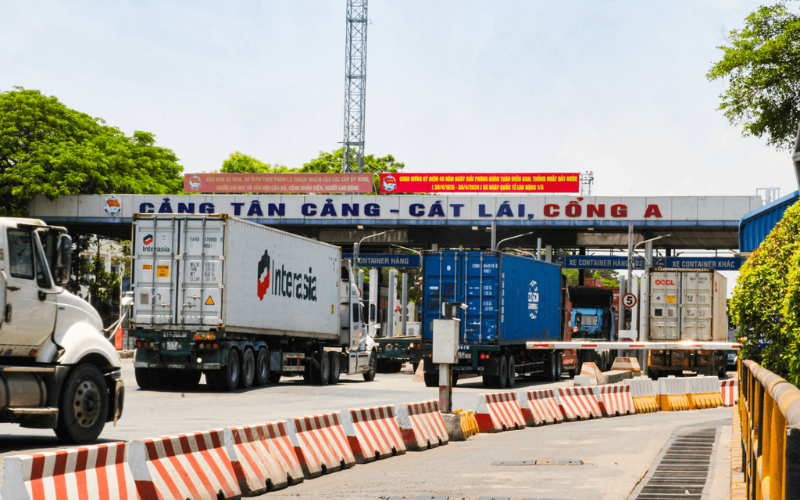
Tan Cang Cat Lai Port is part of the Ho Chi Minh City seaport system and handles container cargo, serving as an important hub for goods in Southern Vietnam. According to information published by the Vietnam Maritime and Waterway Administration, the port has a publicly stated handling capacity of 4 million tons per year.
For businesses with factories, warehouses, or cargo concentrated in Ho Chi Minh City and other southern provinces, Cat Lai can be an option to consider when planning container shipping to the US. However, the final choice of port should still be based on shipping schedules, available services, and the specific delivery location.
Cai Mep Thi Vai has an advantage in handling large vessels. For example, information published by the Vietnam Maritime and Waterway Administration indicates that Cai Mep International Terminal can accommodate vessels of up to 194,000 DWT. This is an important factor that enables the Cai Mep port area to handle long distance international shipping routes.
For shipments to the US, businesses with cargo originating in Southern Vietnam should check the shipping services currently operating from Cai Mep instead of automatically choosing a fixed port. Depending on the timing, shipping line, destination port, and delivery schedule, shipping from Cai Mep may offer a more suitable option in terms of transit time and transportation planning.
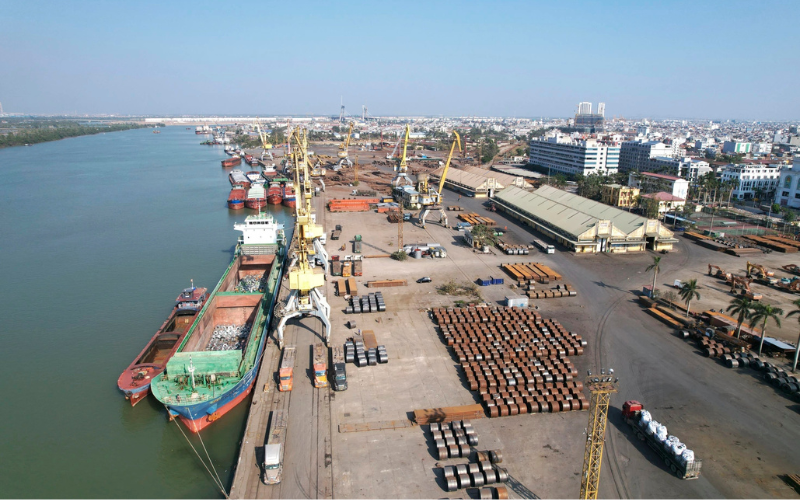
Hai Phong is an important seaport hub in Northern Vietnam, with a system of terminals serving different types of cargo. Notably, the Lach Huyen port area is being developed as a gateway port combined with an international transshipment hub, creating additional container handling capacity for the northern region.
In 2026, Lach Huyen continued to demonstrate its ability to accommodate large container vessels when berths 5 and 6 safely received the MATZ MAERSK, a vessel with a capacity of nearly 214,000 DWT, in June. This demonstrates that port capacity in Northern Vietnam continues to expand, providing additional options for businesses with cargo from the northern region shipping to the US.
After leaving Vietnam, containers are transported to the destination port according to the selected shipping service and schedule.
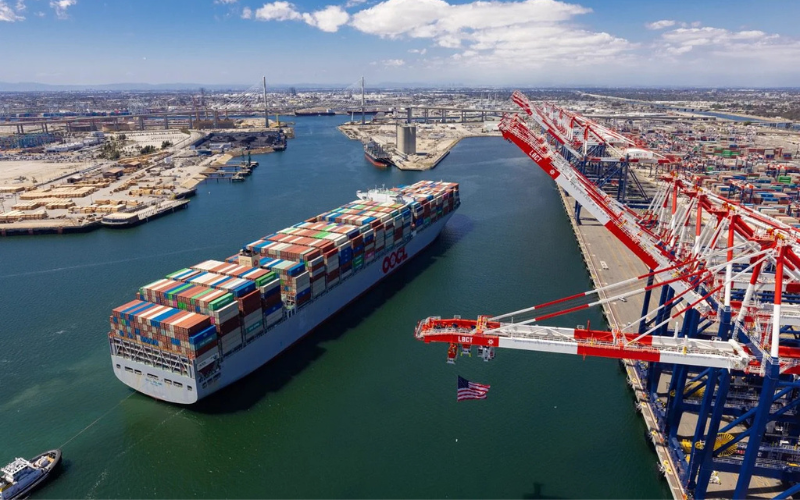
The Port of Los Angeles is one of the largest container gateways in the US and has a multimodal transportation network supporting cargo after it arrives at the port. According to official port information, it currently has seven major container terminals and six on dock rail facilities directly connected to the Alameda Corridor, supporting the movement of cargo from the port into the inland rail network.
This makes Los Angeles an option worth considering for businesses with customers or warehouses in California and areas with convenient connections to transportation networks from Los Angeles. Official port data also shows that Vietnam was among the Port of Los Angeles' top five trading partners in 2025, highlighting the significant role of trade between Vietnam and this port.
The Port of Long Beach is located within the San Pedro Bay port complex alongside Los Angeles and serves as a major gateway for trans Pacific cargo. For businesses exporting from Vietnam, Long Beach can be considered when the shipping line provides a suitable service to the destination port and the port aligns with the company's distribution plan in the US.
In practice, choosing between Long Beach and Los Angeles should not be based solely on the port name. Businesses should consider the shipping schedule, estimated transit time, operating conditions, port related costs, and distance from the port to the receiving warehouse to determine the option with the most suitable overall cost.
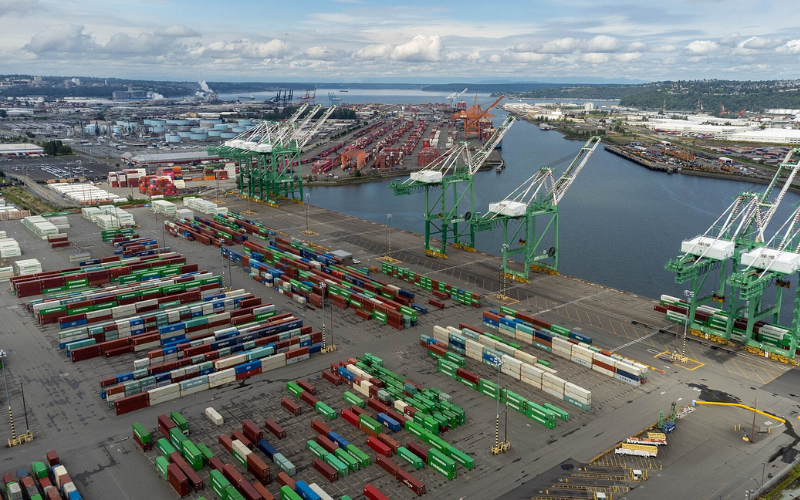
Seattle and Tacoma are currently operated under The Northwest Seaport Alliance, a cooperative partnership between the Port of Seattle and the Port of Tacoma. This port complex is a major container hub with connections to distribution areas across the Midwest, Ohio Valley, and East Coast.
Therefore, Seattle Tacoma can be suitable for shipments destined for the Pacific Northwest or cargo that needs to connect to inland distribution centers. The port complex also has strong trade relationships with Vietnam and provides international container services connecting with Asia.
Businesses should determine the appropriate port based on the entire journey, from the cargo pickup location in Vietnam to the receiving warehouse in the US, before comparing shipping schedules and total costs.
The location of the factory or warehouse directly affects how containers are transported to the port. For example, cargo from Northern Vietnam may be shipped through Hai Phong, while cargo from Ho Chi Minh City and other southern provinces may be routed through Cat Lai or Cai Mep, depending on the shipping service and schedule.
The distance from the cargo pickup location to the port should also be included in the total transportation cost. A shipping option with a lower ocean freight rate may not necessarily be more economical if it requires long distance inland transportation, while an option with a slightly higher ocean freight rate may be more cost effective if it reduces inland transportation expenses.
In the US, the destination port should be considered based on the location of the warehouse, customer, or distribution center. Cargo delivered to California may be routed through Los Angeles or Long Beach, while shipments serving the Pacific Northwest may consider Seattle Tacoma.
For cargo that continues further inland across the US, businesses should also calculate the transportation plan after the container leaves the port. The Northwest Seaport Alliance states that the Seattle Tacoma system connects with major distribution centers across the Midwest, Ohio Valley, and East Coast, highlighting the importance of considering the destination port as part of the entire transportation chain.
Businesses should prepare complete information about the cargo, timing, and pickup and delivery locations so that the logistics provider can develop an appropriate transportation plan.
Before requesting a quotation, businesses should determine the type of cargo, quantity, number of containers, container type, pickup location, and cargo ready date. This information allows the logistics provider to evaluate the appropriate departure port, inland transportation arrangements, and shipping schedule.
For example, a manufacturing company in Northern Vietnam planning to export multiple containers to the US should provide the factory location, cargo ready date, and receiving warehouse address in the US. Based on this information, the transportation plan can be developed around Hai Phong as the departure port, an appropriate destination port in the US, and suitable inland transportation instead of simply comparing ocean freight rates.
Businesses should request specific information about the port of departure, destination port, shipping line, sailing schedule, estimated transit time, and transportation arrangements after the vessel arrives. Even when shipments originate from the same location, different services may have different schedules and transportation arrangements.
For export cargo with strict delivery deadlines, businesses should prioritize a route with a suitable schedule and reliable control over the transportation process. An experienced logistics provider can help businesses compare ports, shipping routes, and inland transportation options to select a solution that matches their actual requirements.
When shipping containers from Vietnam to the US, choosing the right departure port, destination port, and shipping route directly affects both transit time and logistics costs. VDM Forwarder supports businesses in evaluating shipment information, cargo pickup locations, delivery locations in the US, and required delivery timelines to develop an appropriate transportation plan.
With experience in handling container cargo and international shipping routes, the VDM Forwarder team can support businesses in checking sailing schedules, selecting departure and destination ports, and coordinating inland transportation at both ends. This gives businesses a better basis for balancing costs, managing delivery schedules, and reducing potential issues throughout the transportation process from Vietnam to the US.

Receive shipping service price lists and optimal logistics solution advice from our experts.




We are always ready to advise and support you 24/7.