
Circular 142/2026/TT-BTC was issued by the Ministry of Finance on September 29, 2026. The Circular amends and supplements the rules on customs procedures for exported, imported, and transit goods sent through the postal services of designated enterprises and through international express delivery services.
The most notable new point is the requirement for electronic identification and authentication for certain groups of goods. According to the Circular, this is carried out in line with the law on electronic identification and authentication. In simple terms, the information of the recipient or sender is checked against identification data to confirm the right person. As a result, customs procedures for postal and express items move more strongly into the electronic environment.
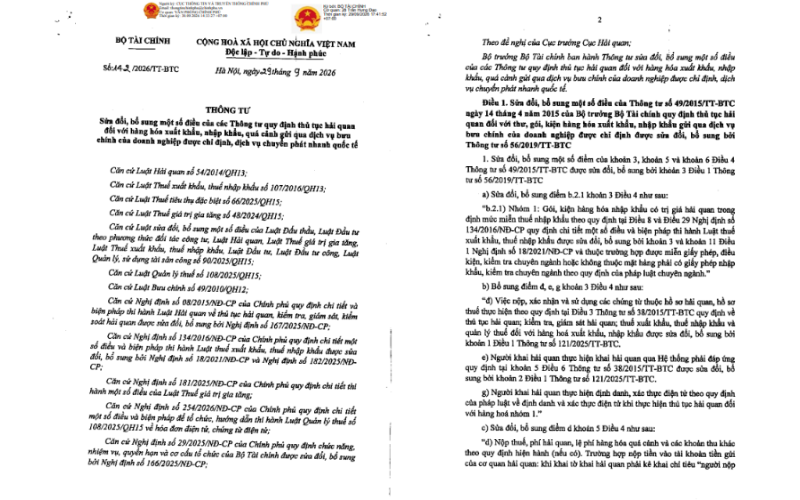
For goods that require specialized inspection, documents are usually more complex, so customs declaration services from an experienced provider help avoid mistakes when filing the declaration.
See details: https://datafiles.chinhphu.vn/.../2026/9/142-btc.signed.pdf
Not every international parcel has to be identified. The requirement depends on the type of service and the group of goods.
Group 1 postal items are goods whose customs value is within the import duty exemption allowance and which are also exempt from licenses, conditions, and specialized inspection, or are not subject to those requirements. A low value alone is not enough to place an item in this group, because the goods must also meet management conditions. For example, a small value parcel that is subject to specialized inspection does not belong to Group 1.
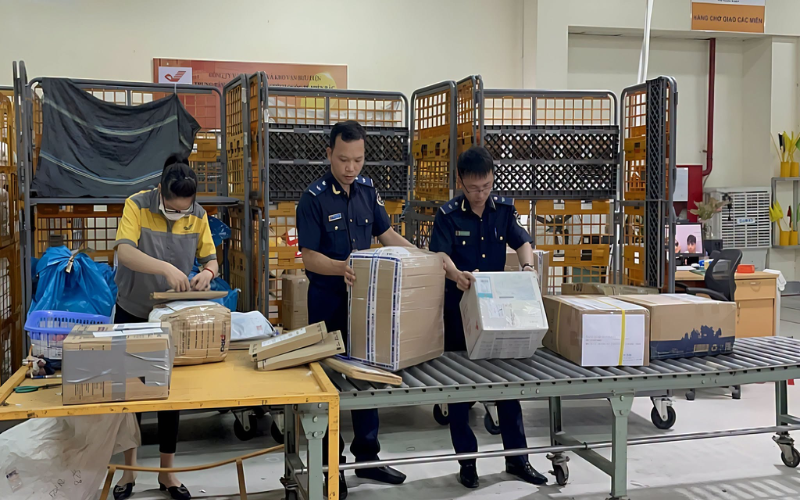
For express delivery services, Group 2 items are low value goods as defined by regulations, and they are subject to identification. Group 1 items are documents and papers with no commercial value. According to the guidance in Official Letter 23663/CHQ-GSQL dated October 29, 2026 of the Customs Department, Group 1 express items do not have to be identified.
It is important not to confuse these two concepts. Being exempt from import duty does not mean being exempt from every tax. For example, under guidance from the Ministry of Finance, from February 18, 2025, imported goods sent through express delivery services are no longer exempt from value added tax. Recipients should ask the carrier about the taxes and fees that may arise before receiving the goods.
The identification requirement brings responsibilities for both the carrier and the recipient.
When carrying out procedures on behalf of the goods owner, postal and express delivery enterprises must notify the recipient, for imported goods, or the sender, for exported goods. The purpose is to let both sides coordinate with the customs authority on authentication.
Recipients need to prepare accurate and consistent information, including full name, identification number or tax code, and address. When they receive a notice from the carrier, recipients need to respond promptly. If the information in different places does not match, authentication may not be completed and the shipment may take longer to process.
Express delivery enterprises are allowed to pay taxes and fees on behalf of the goods owner through the customs authority’s temporary revenue account at the State Treasury. Recipients should still keep information on the amounts paid for reference when needed.
The declaration for low value imported goods uses type code A45, together with classification code P for postal items, E for express items, and G for gifts. Four customs declaration forms have been amended.
On November 12, 2026, the Customs Department issued Decision 1813/QĐ-CHQ on the data format of declarations for postal and express items. The Decision takes effect on the same date, November 16, 2026, and replaces the temporary rules issued in 2025.
In the early period, a shipment may take extra time to process if the identification information does not match or authentication is not completed. However, there is currently no basis to conclude that postal and express items will all be cleared more slowly. Actual timing also depends on how each carrier implements customs procedures for express shipments in the system and how well recipients cooperate.
Cross border ecommerce buyers, small shops that import goods, and businesses receiving samples should follow notices from the carrier closely. For goods that fall outside the groups above, or when the goods owner wants to handle the procedures themselves, the documents and processing time will differ. In that case, it is necessary to ask the express carrier or the customs service provider in advance.
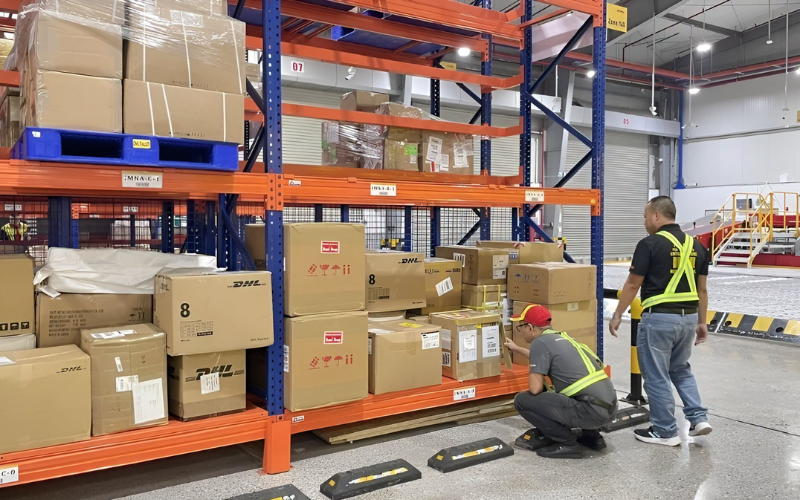
When a shipment is large enough, a business can consider air freight or sea freight instead of sending many small parcels.
With more than 15 years of experience in sea freight, domestic transport, air freight, container shipping, and customs declaration services, VDM Forwarder follows new customs regulations to keep customers informed. Following the change in customs procedures for express shipments from November 16, 2026, the VDM Forwarder team advises on customs procedures and import options suited to each type of goods, from samples to large shipments that need full container transport.
If your business needs advice on customs procedures or an import plan for its shipment, VDM Forwarder is ready to provide consultation and a quote through the hotline or the company’s official contact channels.

Receive shipping service price lists and optimal logistics solution advice from our experts.




We are always ready to advise and support you 24/7.