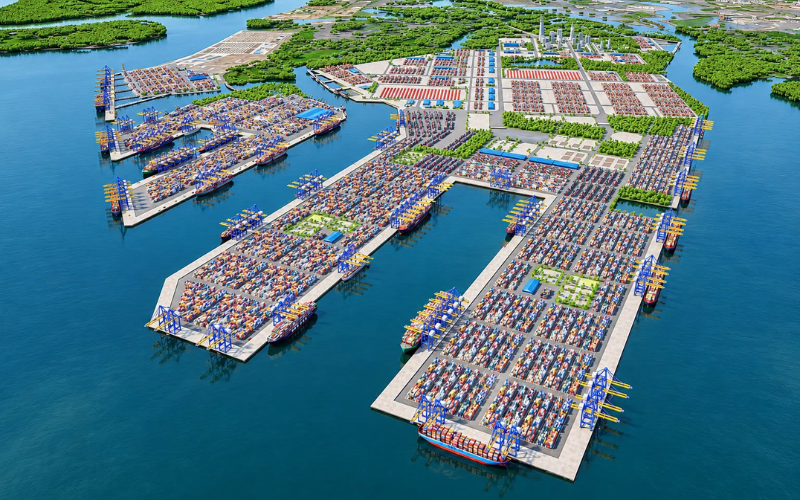
On October 30, 2026, the Ho Chi Minh City People’s Committee issued Decision No. 7309, approving the investment policy and the investors for the Cai Mep Ha downstream port complex, logistics center and industrial, urban and service zone. The whole project has a total capital of more than VND 204,658 billion, equal to about USD 7.9 billion, with an operating term of 70 years. It covers about 2,537 hectares in Tan Phuoc Ward and Tan Hai Ward.
The complex is divided into three subzones. Subzone 3 is the Cai Mep Ha downstream container port with capital of VND 153,546 billion. Subzone 7 is the Cai Mep Ha logistics center, covering 906 hectares with capital of about VND 28,601 billion. Subzone 8 is for industry, urban development and services, covering 850.67 hectares with capital of nearly VND 22,510 billion.
The investor consortium has 5 companies. Can Gio Tourism Urban Development JSC, a member of Vingroup, leads the consortium. The other members are Dat Lanh Trading Company, Thanh Binh Company, Binh Minh Moi Company and one more enterprise. Earlier, in June 2025, Vingroup submitted a proposal to the Ministry of Finance asking for approval of the investment policy.
Approving the investment policy and the investors in a single decision shortens the procedures. After this step, the consortium moves on to the next tasks, such as completing the environmental impact assessment, receiving land and paying site clearance compensation. The environmental impact assessment report for subzone 3 is still open for public consultation.
Subzone 3 covers about 780.66 hectares. Its design capacity is 23.4 million TEU per year. TEU is the unit based on a standard 20 foot container, commonly used to measure cargo volume through a port. The port can receive ships of up to 250,000 DWT, which are among the largest container ships on long ocean routes.
The project documents also list items such as wharves, container yards, the water area in front of the berths and port support services, including ship fueling, pilotage, towing, ship repair and oil spill response. According to some news outlets, the project is expected to install about 165 cranes and 32 automated gate lanes that recognize containers and license plates.
The project is split into two phases, carried out from 2027 to 2035. The first phase, before 2030, will build 3 container wharves with a total length of about 1,383 meters, along with yards and operating infrastructure. According to Dan Tri, the container port accounts for about 75% of the total capital, and the whole project is expected to be completed in 2035. Because the investment is so large, the Cai Mep Ha downstream container port needs many years to be completed and fully operational.
Along with the approval, the city set several specific conditions. The consortium must arrange more than VND 30,000 billion in equity and disburse at least VND 50,000 billion in the first 10 years. In 2027, the project is expected to complete procedures for land allocation, land lease, land use conversion and site clearance compensation. The first three berths are targeted for completion before 2030.
These milestones help authorities track progress and avoid a situation where a project drags on for years without visible construction. For businesses watching the market, the milestones also give a basis for estimating when the port will start receiving ships.
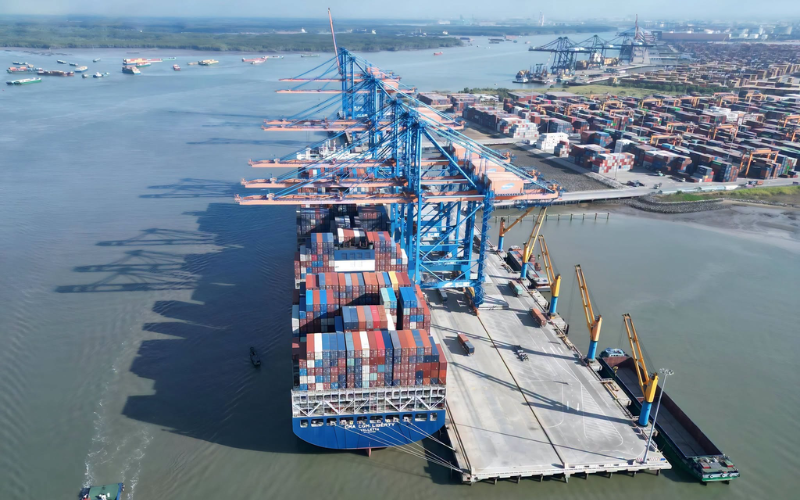
The Cai Mep area sits along the Thi Vai River, where the Cai Mep Thi Vai port cluster already receives large container ships running directly to Europe and the US without transshipment through a third country. After the administrative boundary merger, this area now belongs to Ho Chi Minh City. According to the project documents, the Cai Mep Ha downstream container port is defined as a gateway and international transshipment port, serving both import and export cargo and transshipment cargo from other countries.
The free trade zone linked to the Cai Mep Ha seaport was established under Decision No. 4560 dated July 23, 2026, with a size of about 4,174 hectares in Tan Phuoc and Tan Hai Wards. The container port, logistics center and industrial zone of the project are all located in this zone. As a result, goods can be stored, packed and processed close to the port instead of traveling long distances between different areas.
When port capacity rises and larger ships call more often, shipping lines will have more route options. Businesses may see fewer transshipments, shorter delivery times and better container freight rates. However, these are still expectations. The real results depend on construction progress and connecting infrastructure such as roads, waterways and waiting yards.
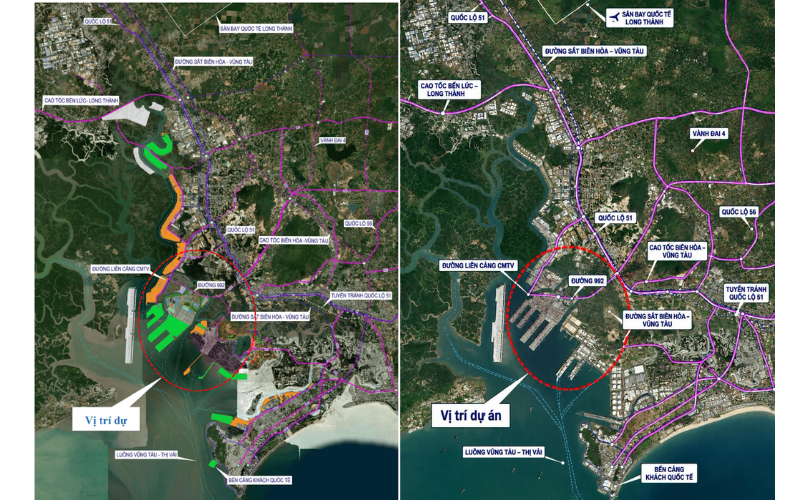
The Cai Mep Ha logistics center, covering 906 hectares and planned with warehouses, container yards and dedicated roads, will create more demand for services. Freight forwarders can expand into less than container load consolidation, customs declaration, domestic transport and warehousing. Companies that prepare early in staffing, procedures and management systems will have an advantage when the Cai Mep Ha downstream container port starts operating.
The project still has many steps ahead, including completing the environmental impact assessment, site clearance, raising capital and building in phases. Many figures in this article come from a report that is still open for consultation, so they may change when the documents are finalized. Businesses should follow official announcements from the Ho Chi Minh City People’s Committee and port management agencies to stay up to date.
In short, the Cai Mep Ha downstream container port is the largest project by capital in the complex, with a capacity of 23.4 million TEU per year and a completion plan running to 2035. If it proceeds on schedule, it will help reshape the sea freight map of southern Vietnam.
VDM Forwarder is a company working in logistics and sea freight in Vietnam. We closely follow changes in port infrastructure so we can advise suitable shipping options for each of our customers’ shipments. If you need information on container freight rates, import and export procedures or how to choose a shipping route, VDM Forwarder is ready to provide consultation and a quote through the hotline or the company’s official contact channels.

Receive shipping service price lists and optimal logistics solution advice from our experts.




We are always ready to advise and support you 24/7.