
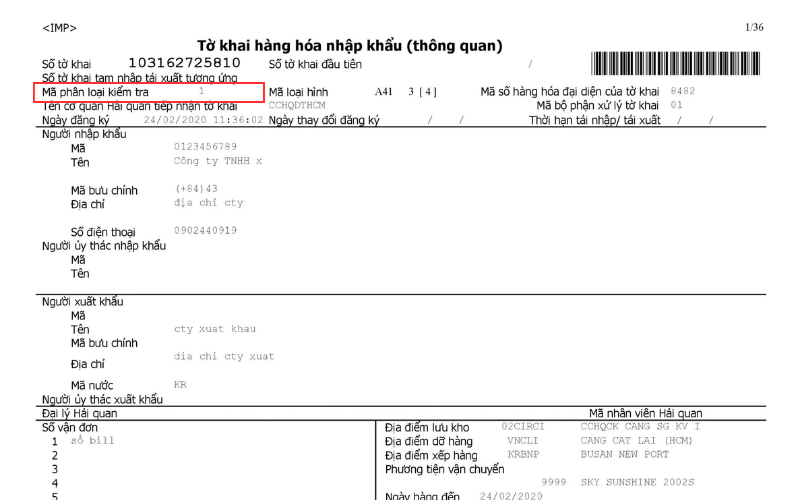
The risk management system of the General Department of Customs automatically classifies import or export declarations immediately after the enterprise successfully transmits the data. This classification of customs clearance channels determines the level of control by the authorities for each specific shipment.
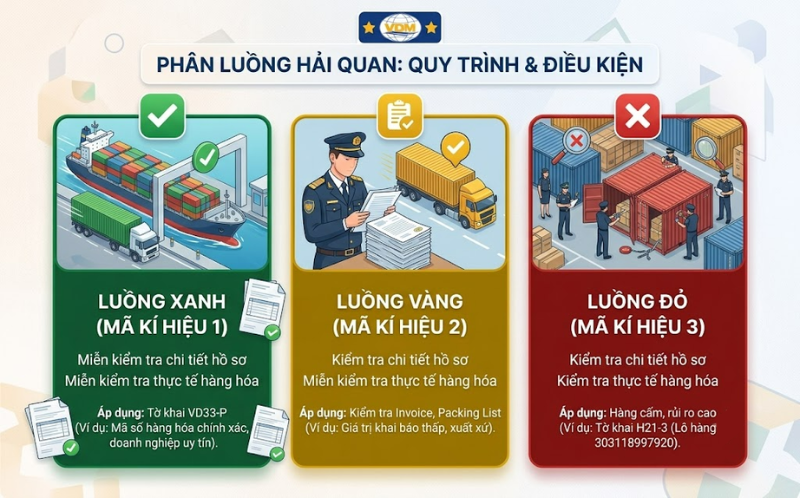
This is the fastest clearance result and the target for every enterprise. When the system returns a green channel result, it accepts the declaration information of the enterprise without requiring any further checks of paper documents or physical goods. The cargo owner completes the import-export tax obligations and receives the release order directly on the system.
Goods assigned to the green channel usually belong to prioritized categories, have clear origins, and are imported by enterprises with a good record of legal compliance. The green channel process takes place extremely quickly, helping enterprises minimize yard storage time and put goods into circulation immediately.
The yellow channel requires the controlling authority to conduct a check on the validity of the physical paper documents or the attached electronic documents. Enterprises need to present all relevant documents, including commercial contracts, commercial invoices, packing lists, ocean bills of lading, and certificates of origin or specialized permits if applicable.
The inspector compares the information on the declaration with the actual documents to detect discrepancies in customs value, HS codes, or product origin. If the set of documents is completely accurate and there are no suspicions, the declaration will be cleared. In case of any doubt, the authorities may request the enterprise to explain the origin of the shipment in detail.
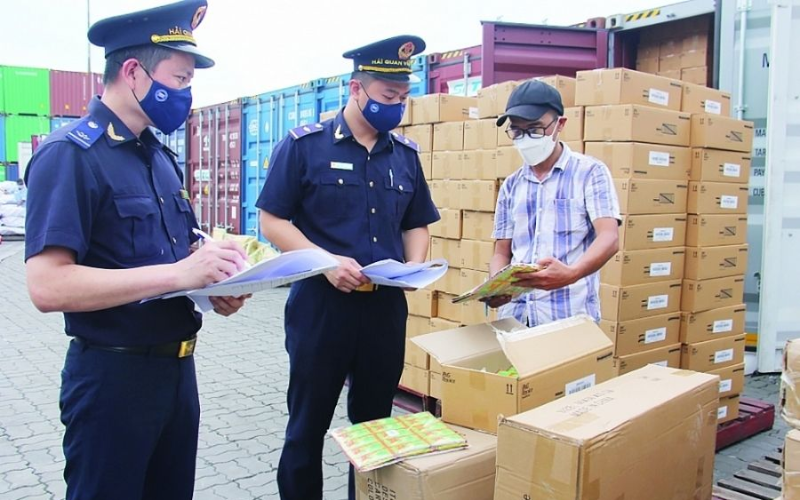
This is the strictest control channel and generates the most costs for import-export enterprises. A red channel result forces customs authorities to both inspect the paper documents in detail and open the container to physically inspect the goods at the port yard.
The level of physical inspection can range from five percent, ten percent, to the entire shipment, depending on the decision of the customs branch managing the shipment. The purpose of this inspection is to verify whether the actual goods match the declaration in terms of quantity, type, quality, or contain prohibited import items. This inspection process requires the enterprise to send field staff to coordinate with port workers to cut the seal and open the container for the actual inspection.
To complete the clearance procedures for a shipment, enterprises need to follow the correct process according to current regulations.
In the first step, the enterprise declares full information on the ECUS5 system using a legally registered digital signature. After carefully checking the parameters, the declarant transmits the official declaration to the system of the General Department of Customs. The system automatically receives the data, compares the information with the risk database, and assigns the customs clearance channels immediately.
Depending on the returned result, the enterprise applies the corresponding handling measures. With the green channel, the cargo owner prints the declaration barcode and goes to the port to pick up the goods. With the yellow channel, the declarant submits the profile online or directly to the customs branch for officers to inspect. With the red channel, the enterprise prepares the documents for the registration officer, contacts the port to move the container to the inspection area, and conducts the physical inspection alongside the customs officer.
New businesses entering the market often experience confusion, leading to errors when performing customs clearance procedures at the border gate. The following practical experiences will help enterprises limit risks and speed up the cargo clearance process more effectively.
Inconsistent information among documents such as commercial invoices, packing lists, and bills of lading is the leading cause of declarations being redirected or held for inspection. Enterprises need to carefully review information on quantity, weight, product description, and marks on each document before transmitting the declaration to the system.
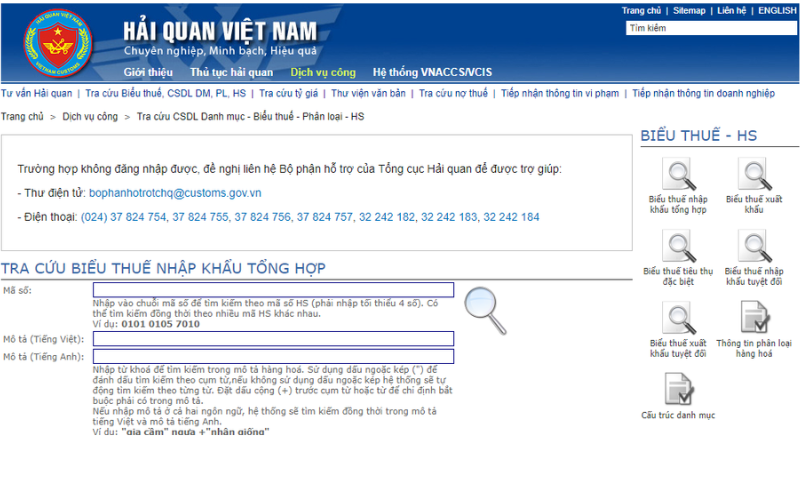
Declaring the wrong HS code can lead to tax evasion or underpayment, which is strictly controlled by customs authorities. Enterprises should proactively consult experts for new or complex items to ensure that the process runs smoothly.
The automated system evaluates risk levels based on the operational history of the enterprise. Enterprises that frequently amend or cancel declarations or face administrative penalties will be placed on a high-control list, significantly increasing the rate of yellow and red channel classifications. Maintaining honesty and accuracy in declarations helps improve business credibility on the system and ensures that customs clearance channels always yield the best results.
Performing customs procedures independently requires enterprises to have an experienced team with a deep understanding of current laws. Recognizing this difficulty, VDM Forwarder provides professional, comprehensive customs declaration service packages for all import-export enterprises.
VDM Forwarder owns a professional field staff team that thoroughly understands customs clearance channels operations at major seaports and airports nationwide. We take responsibility for advising on accurate HS codes, verifying consistent document sets, and directly handling situations at the border gate when your shipment is assigned to the yellow or red channel. Partnering with VDM Forwarder helps customers save maximum time, reduce warehouse and yard storage costs, and focus entirely on their core business operations. If your business needs a consultation, please contact us to receive the most dedicated support for your next shipments.

Receive shipping service price lists and optimal logistics solution advice from our experts.




We are always ready to advise and support you 24/7.